
TLDR: Federal housing subsidies were never going to solve Longmont’s housing crisis because there isn’t enough federal money to build the 14,000 affordable homes the city needs. Building those units through federal programs would cost $3.8 billion over ten years and require doubling all city taxes. Longmont can solve its housing crisis locally by legalizing “missing middle housing” like duplexes and small apartments in residential neighborhoods, which creates affordable housing through market forces without requiring taxpayer subsidies.
We’re On Our Own. We Always Have Been.
While I often emphasize the power of local government to improve people’s lives, that doesn’t mean state and federal policies don’t matter. They absolutely do. But relative to their actual power to solve our problems, higher levels of government receive a disproportionate amount of our attention and hope.
The Trump administration is planning to curtail federal subsidies for Affordable Housing. While I disagree with cutting support for families who need it, this news shouldn’t surprise anyone who’s been paying attention. But I’m not worried.
The federal government was never going to solve Longmont’s housing crisis anyway.
How Federal Housing Assistance Actually Works
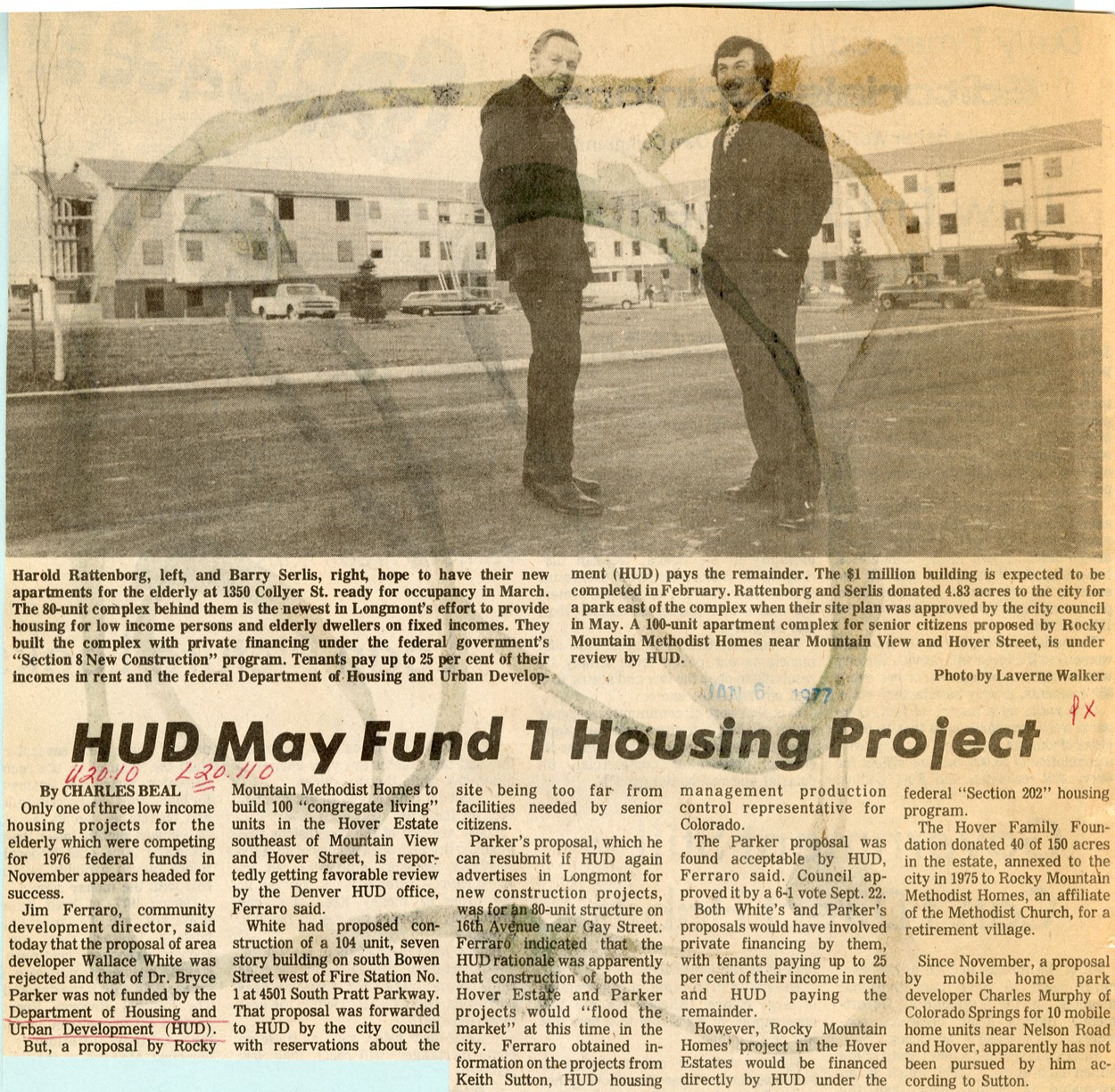
The Longmont Housing Authority serves as our city’s subsidized housing provider, administering the Housing Choice Voucher Program for low-income families and overseeing the city’s Affordable Housing program.
Affordable Housing—note the capital letters—refers to housing that receives government subsidies during construction and restricts occupancy by income.1Broadly speaking, you need to make less than 80% of Longmont’s area median income for your family size. For a two parents and a child that’s $96,771.
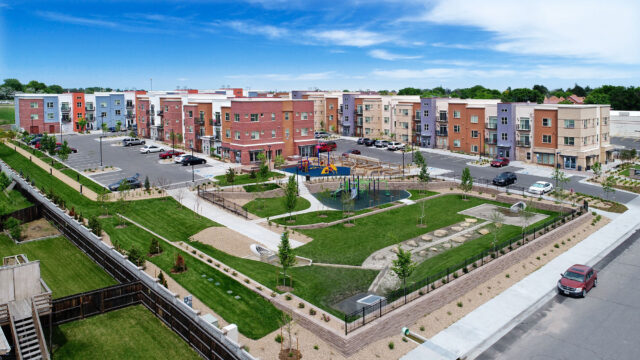
But like most American social policy, we primarily fund subsidized housing through the tax code. The Low Income Housing Tax Credit (LIHTC) program channels federal money to states, which then award tax credits through competitive applications to specialized housing developers. These developers have become experts not necessarily in building efficiently, but in navigating the labyrinthine rules of federal housing programs.
Colorado does this reasonably well. According to RAND Corporation research, Colorado outperforms Texas and California by making LIHTC projects actually cost less than comparable market-rate projects—a sign of effective program implementation. In 2024, Colorado awarded $28 million in tax credits for Affordable Housing construction.
LIHTC has funded several important projects in Longmont, including developments that house thousands of our neighbors. The program has funded 1,985 units in Longmont (though not all of them have been built yet). This is worthy work that makes a real difference in people’s lives. The program’s total federal budget in 2024 was $10.5 billion.
There Isn’t Enough Government Money
But here’s the reality: there isn’t enough federal money to solve our problems.
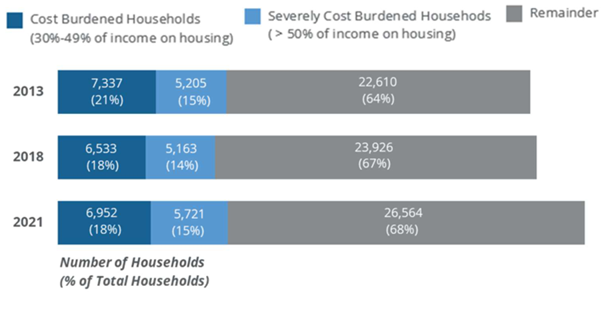
Longmont’s 2023 Housing Needs Assessment found that we need 14,000 more affordable homes just for people who already live here but are severely cost-burdened by housing expenses.
Let’s do the math. Building 14,000 LIHTC units over ten years would cost $3.8 billion2Assumes $260 per net rentable square foot per RAND Corporation research, 15% studios at 475 sq ft, 35% 1 bedroom at 675 sq ft, 35% 2 bedroom at 900 sq ft, 15% 3 bedroom at 1150 sq ft.—about 8 times Longmont’s entire 2025 budget of $473 million. Even with favorable bond rates, Longmont would need to dedicate roughly $380 million annually to this effort.
To raise that money, we would need to double every tax, fee, and revenue source the city collects—property taxes, sales taxes, utility fees, even parking tickets—and dedicate all of that additional revenue exclusively to housing construction.
I’m sympathetic to the moral argument that this is the right thing to do. But it would be disastrous for our local economy and devastating for the many families already struggling financially who would suddenly face doubled tax bills.
There’s Plenty of Local Money
Fortunately, the most effective way to ensure enough housing for everyone who needs it is also the approach that costs taxpayers the least, creates the most local wealth, enhances quality of life, and best protects our environment. And it doesn’t require a single federal dollar.
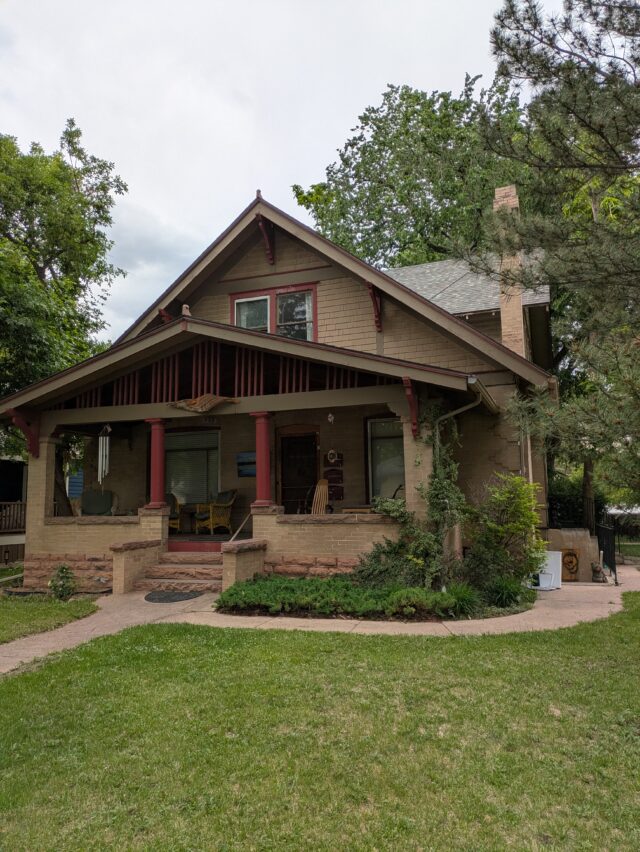
All we have to do is allow incremental growth throughout our existing neighborhoods—the “missing middle housing” I’ve been advocating for three years.
When cities make it legal and easy to build duplexes, triplexes, and small apartment buildings in residential neighborhoods, housing supply increases and prices moderate. We’ve seen this work in places like Portland, OR. There, missing-middle housing sells for $250,000 – $300,000 less than comparable single family homes. Bryan, Texas was able to achieve price stability by creating a library of pre-approved missing middle designs which lowered costs for small developers while adding high quality units to the city.
This happens through a process economists call “filtering.” When new market-rate housing gets built, it reduces pressure on existing housing stock. People with higher incomes move into newer units, freeing up older, more affordable options for families with lower incomes. The housing market transforms from zero-sum competition—where my gain is your loss—into a dynamic system where everyone benefits from increased supply.

Filtering might sound like “trickle down housing.” But the data documenting the public benefit both compelling and thorough. It’s just not as visible because no one holds a ribbon cutting when their tenant moves into a nicer place. Adding 100 market rate homes results in 45 – 70 affordable homes (no capital letters, no government subsidy), and lowers the rent of existing units by 5-7%. Longmont’s inclusionary housing ordinance currently requires 12 units of Affordable Housing to be built for every 100 units of market rate housing.3Inclusionary housing also probably increases the cost of all the market rate units which have to subsidize the Affordable units.
Think of it like the shoe market. Nobody worries that Nike building more shoes will make footwear unaffordable. We understand that more production means lower prices and more choices for everyone. Housing works the same way when we remove artificial scarcity created by restrictive zoning.
Longmont Can Lead
I’ve been advocating for Longmont to embrace this path for three years. Unfortunately, our current council is taking action only when the state required them to — legalizing front yard gardens, making it easier to build ADUs, permitting more housing types near transit. Each time, they acted reluctantly and allowed the state to set the terms while the Colorado Municpal League whined about a loss of local control.
If we want different results, we need to do something different. We need leadership willing to proactively legalize the housing types that naturally create affordability, rather than waiting for state mandates or hoping for federal solutions that will never come.
The cost of housing is a choice. We can choose to keep doing what we’ve been doing and keep getting what we’ve been getting. Or we can choose to lower housing costs by allowing our neighborhoods to grow incrementally, organically, and affordably.
That choice is entirely ours to make. And it doesn’t require waiting for anyone else’s permission.
The federal government was never going to save us. But we can save ourselves.
