

TL;DR: Longmont’s streets must work for all residents regardless of age or ability. We should implement proven safety solutions immediately using tactical urbanism. Our success will be measured by lives saved and children safely walking to school.
Our Goals: Streets That Serve People First
Many Longmonters lack freedom of mobility, because Longmont today forces most residents to drive everywhere. This isn’t inevitable—it’s a choice of urban design that consumes about 15% of the average household’s income. Because everyone has to drive everywhere, more people means a lot more traffic. Additionally, while some people prefer to drive everywhere, our transportation network must work for everyone: children, seniors, people with disabilities, and families who can’t afford multiple cars.
The truth is, Longmont wasn’t designed for how we actually live. With about half of Longmonters commuting outside the city for work, our streets simply weren’t built to handle this daily exodus and return. The last time Longmont’s transportation system worked well was when it had many fewer users during COVID.

At intersections like 17th and Main—one of the deadliest in Longmont—people trying to walk to the grocery store face real danger. At King Soopers on 17th and Pace, residents who live in surrounding neighborhoods drive instead of walking because crossing those streets feels unsafe. These are both bad safety outcomes.
I have a simple test for whether our infrastructure is good enough: If a child can ride their bike safely across town to visit a friend, then that bike lane is good enough for everyone. The best data clearly shows that once people are confident in the safety of bike lanes, usage dramatically increases. Which means that we can use traffic safety initiatives to reduce traffic congestion.
Our Methods: Action Over Endless Planning
Tactical Urbanism for Immediate Safety
The City Government should measure outcomes the say way Longmonters do. At the end of the day, Longmonters don’t care how many public meetings there are, or plans created. They care whether the streets are safe. Instead of spending a year doing drawings and asking the public to support theoretical changes, I’ll push the city to implement low-cost, temporary safety improvements to make things safer right away.

We’ll use paint, planters, and bollards to test traffic calming measures, protected bike lanes, and pedestrian safety improvements. We’ll gather real-world data and community feedback on a proposal that people can see with their own eyes to inform permanent changes. We’ll incorporate public art to beautify our neighborhoods. And as soon as we can afford it, we’ll pour concrete to make the changes permanent.
Adopting Proven Safety Standards

I’ll push to adopt the National Association of City Transportation Officials (NACTO) Urban Street Design Guide as our standard, prioritizing safety over speed and creating streets that serve neighborhoods, not just through traffic.
Longmont has made a Vision Zero pledge to eliminate traffic deaths. The next several years will be critical for getting the program into implementation, and setting the tone for progress. The transportation department should prioritize our deadliest intersections for immediate improvements, and I’ll convince city councilors to empower our transportation staff to implement solutions quickly.
Maximizing Public Transit Investment
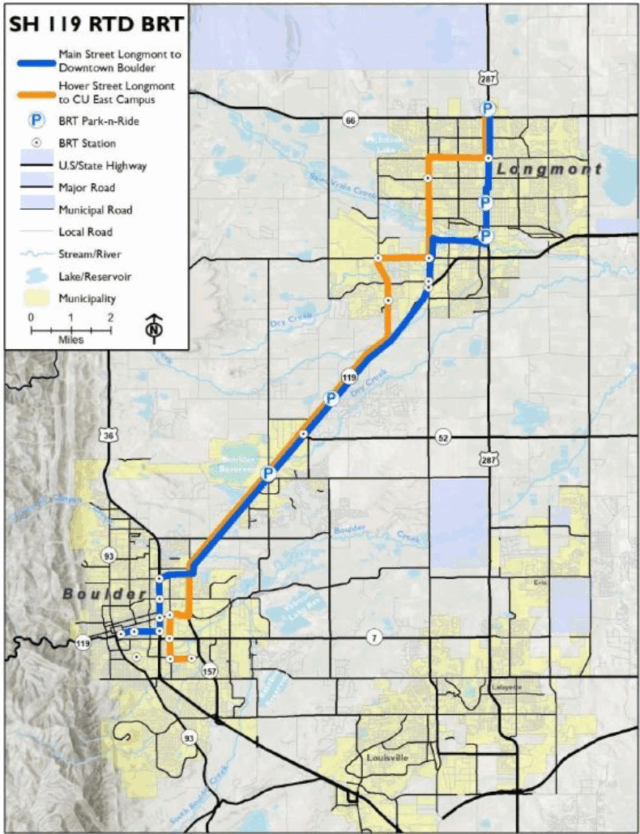
The CO-119 Bus Rapid Transit opening in 2027 could transform our traffic problems. By replacing just 3 car trips to Boulder per week, BRT can save a family $1,100 per year. But only if it’s accessible.
We’ll create a connected network of safe walking and biking routes linking residential neighborhoods to transit stops, stores, and employment centers. If you have to drive to the Park ‘n Ride, you’ll probably just drive all the way to Boulder.
Measuring Our Success: Lives Saved and Money Back in Pockets
I believe in accountability through measurable outcomes. Here’s how we’ll know we’re succeeding:
Community Benefits
- Reduced delays (increased levels of service) at major signalized intersections
- Decreased household transportation costs as percentage of income
- Improved air quality measurements across the city
Safety First
- Year-over-year reduction in traffic injuries and deaths, achieving zero deaths by 2035
- More children walking or biking to school than being driven
Real Transportation Choices
- Growth in trips taken by foot, bicycle, and transit
- Increased BRT ridership when service begins in 2027
Implementation That Works
- Street safety projects spend less time in planning phases before public benefit is realized
- BRT ridership that’s higher for people who live within walking and biking distance of stops, with enhancements over time to ensure that traffic in Longmont is reduced
Join Me in Building Safer Streets
The cost of time is too high—in time wasted in congestion, in lives lost, in families burdened with transportation costs they can barely afford, in children growing up without freedom to explore their neighborhoods safely. We need to use innovative means to improve traffic safety and reduce traffic congestion quickly.
Together, we can create a Longmont where streets serve people first, where traffic flows smoothly because fewer people need to drive, and where every resident can move safely through our community.
More walk. Less talk.

One comment
David Hartman
October 31, 2025 at 3:14 pm
For traffic renovation agenda, it shows creativity. The subject of bike participation (all ages) increasing is admirable. Unaddressed is their being held accountable when they ignore the traffic laws needs to e addressed. Then we have the ever-increasing use of electric bikes and now unlicensed dirt bikes and their riders on city streets, sidewalks and bike trails posing great danger. The children biking to school and across town is obviously a fair-weather option (3-4 months a year?) However, for the safety of our children, how is crime and the presence of sexual predators (both transitory and permanent) to be addressed?